
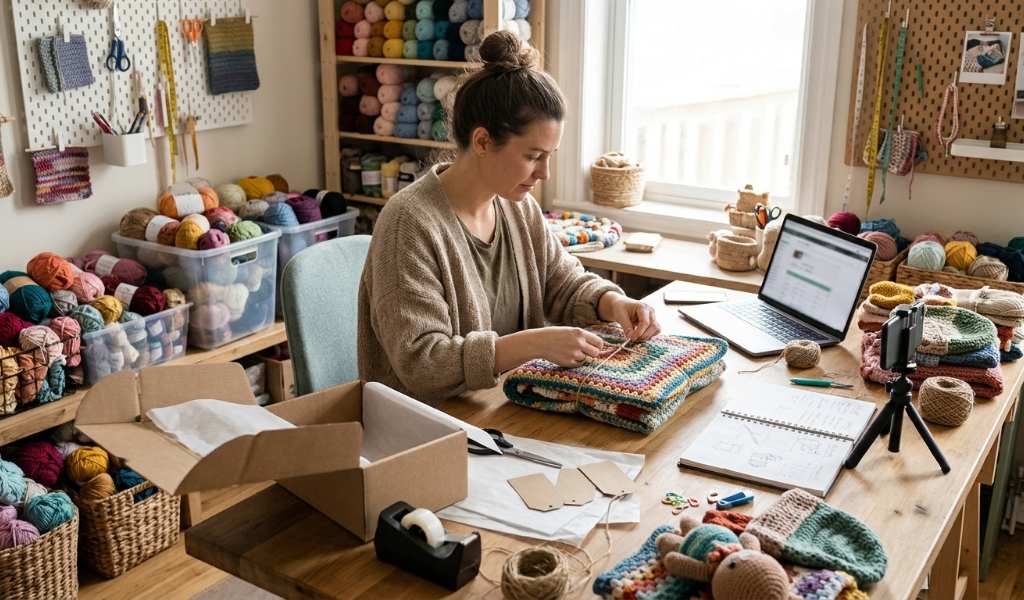
Choose one crochet niche, price your work for profit, and open one sales channel first. Then test five products with real buyers before you expand your range. Finally, track costs, time, and sales from your very first order.
Etsy serves more than 81 million active buyers, so handmade work can reach buyers fast. Meanwhile, many makers fail because they price only yarn and ignore their time. Therefore, a clear niche and honest pricing matter more than a large catalogue.
Key Takeaways:
- Start small: Open one sales channel and test five products first.
- Price fully: Include yarn, time, fees, packaging, and profit in every price.
- Choose niche: Serve one clear buyer group with one clear product type.
- Sell photos: Use bright, clear photos that show size, texture, and detail.
- Track money: Record costs, sales, and time for every single order.
- Grow slowly: Add products only after buyers repeat orders and ask for more.
Choose Your Crochet Niche First
Pick one product type before you buy more yarn or open a shop. First, list the items you enjoy making most and finish fastest. Next, check which items buyers already search for on marketplaces. Finally, choose the overlap between your skill and proven demand.
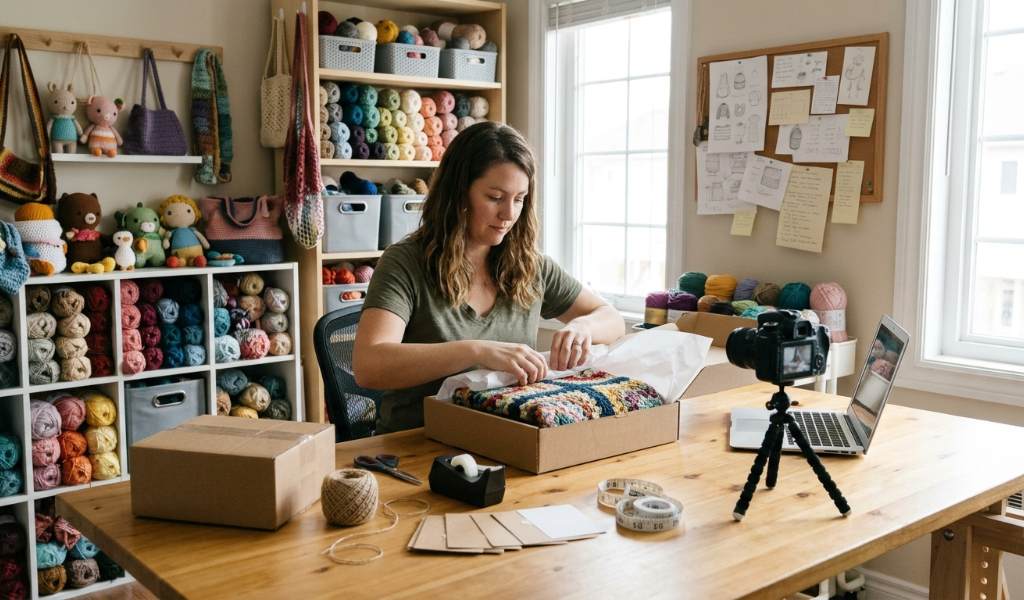
A narrow niche helps buyers remember you and trust your work. For example, baby blankets, amigurumi toys, or market bags each attract different buyers. Meanwhile, a wide range confuses shoppers and slows your production. Therefore, start narrow and expand only after sales prove demand.
- Baby items: Sell blankets, hats, and booties for new parents.
- Home decor: Sell baskets, coasters, and throws for cosy homes.
- Wearables: Sell scarves, shawls, and cardigans for cold seasons.
- Toys: Sell soft amigurumi animals for children and collectors.
Test your niche with five finished pieces before you commit fully. Also, ask friends, family, and online groups for honest feedback. Then note which piece gets the most questions, saves, or orders. Finally, keep the winner and drop the weakest product quickly.
Your niche can change later, but it needs a clear start. Also, a clear niche makes photos, listings, and pricing much simpler. Finally, write your niche in one sentence and use it everywhere.
Build a Simple Business Plan
Write a one-page plan before you spend money on stock. First, name your niche, buyer, price range, and sales channel. Next, set a monthly sales goal and a weekly making schedule. Then list your startup costs, including yarn, hooks, and packaging.
A simple plan keeps a hobby project from turning into costly chaos. Also, many service founders follow the same early steps when they start. For practical inspiration, read this guide to starting a handyman service for planning ideas.
Set a legal and tax baseline early, even for a small shop. First, check local rules for selling handmade goods in your area. Next, choose a business name and check its availability online. Then open a separate bank account or wallet for business money.
Review your plan monthly and adjust goals based on real sales. Also, drop products that cost too much time for too little profit. Finally, keep your plan short, so you actually use it every week.
Price Your Work for Real Profit
Add yarn, time, fees, packaging, and profit to every price. First, weigh or measure the yarn used for each finished piece. Next, time your making, finishing, and listing work honestly. Then multiply your hours by a fair hourly rate for your skill.
Many sellers use an hourly rate between fifteen and thirty dollars. Also, add marketplace fees, payment fees, and shipping materials to costs. Then add a profit margin of twenty-five to fifty percent for growth. Finally, compare the result with similar handmade listings for fairness.
Never price by yarn cost alone, since time drives most handmade value. Also, a strong price protects your energy and your business future. For a longer view, explore how to keep building your financial fortress through steady, profitable sales.
Offer three price tiers when possible, such as simple, detailed, and custom. Also, charge more for custom colours, sizes, or personalisation requests. Finally, review prices every three months as yarn and fee costs change.
Set Up Your Shop and Sell
Open one sales channel first, such as Etsy, a website, or local markets. First, choose the channel where your buyers already shop most. Next, create a clear shop name that matches your niche and style. Then write a short shop story that builds trust fast.
Photograph each product in bright, natural light with a clean background. Also, show the item from the front, back, and side angles. Then add a size reference, such as a hand or a common object. Finally, write care instructions, materials, and dimensions in every listing.
Start crochet as a flexible side business before you quit other work. Also, study other side businesses for seniors for ideas on flexible income and part-time schedules.
Set clear shop policies for shipping, returns, and custom orders. Also, state your making time honestly, especially for custom pieces. Finally, pack each order neatly with a thank-you note inside.
Market Your Crochet Without Burning Out
Share your making process, not just finished products, every week. First, post short videos of stitches, colour choices, and finishing touches. Next, tell the story behind each piece in simple, honest words. Then invite buyers to ask questions and suggest future colours.
- Instagram: Share reels, stories, and shop links for visual buyers.
- Pinterest: Pin clear product photos that link back to your shop.
- Markets: Meet buyers in person at craft fairs and local markets.
- Email: Send new drops and restocks to past buyers first.
Choose two marketing channels and use them consistently each week. Also, reuse one photo across several posts to save time. Then track which channel brings actual orders, not just likes. Finally, drop channels that take hours without bringing sales.
Offer a small launch discount only when it protects your profit. Also, bundle slow sellers with popular items to move stock faster. Finally, ask happy buyers for photos and reviews after delivery.
Handle Orders, Money, and Growth
Create a simple order system before sales grow too fast. First, use a spreadsheet or shop tool to track orders and deadlines. Next, set a weekly making schedule with buffer time for delays. Then confirm custom details in writing before you start making.
Separate business money from personal money from day one. Also, save a share of each sale for taxes and future yarn. Then review your profit monthly and adjust prices or products. Finally, keep receipts for yarn, tools, fees, and shipping.
Grow by adding patterns, kits, or classes only after core sales stabilise. Also, teach a simple class or sell a pattern for scalable income. Then hire help only when orders regularly exceed your making capacity. Finally, protect your time, since burnout kills more shops than competition.
Celebrate small wins, such as your tenth sale or first repeat buyer. Also, learn one new stitch or technique each month for variety. Finally, keep making items you love, since passion shows in finished work.
Frequently Asked Questions
How much money do I need to start a crochet business?
Start with basic hooks, yarn, and packaging, often under one hundred dollars.
What crochet items sell best for beginners?
Sell simple, useful items such as hats, scarves, and market bags.
Do I need a business licence to sell crochet?
Check local rules, since requirements vary by location and sales channel.
How do I price crochet items for profit?
Add yarn, time, fees, packaging, and a profit margin together.
Where should I sell crochet items first?
Open one channel first, such as Etsy or a local market.
Conclusion
Choose your niche today and list your first five products this week. Then price each piece fully and open one sales channel first. Finally, track every sale and adjust your plan monthly. Start your crochet shop now with one niche and five strong products. After that, share your first listing with friends and buyers. Build your business stitch by stitch, starting today.