

New Orleans’ unique climate and water conditions can create specific challenges for keeping fiddler crabs healthy and happy. A sudden loss of appetite in your pet crab is often the first sign that something is wrong in its environment. Studies show that nearly 80% of crab health issues relate directly to water quality or dietary problems. Understanding the local factors that affect your crab’s eating habits is crucial for any keeper. Following proper fiddler crab feeding tips can often prevent these issues before they start. This guide will help you identify the root cause and get your crab back to its active self.
The Unique Water Quality Challenge in New Orleans
New Orleans’ water supply is treated with chloramine, which is toxic to invertebrates like crabs. Unlike chlorine, chloramine does not evaporate if you let the water sit out overnight. This chemical can cause immediate stress, leading your crab to refuse food. Furthermore, the local water’s pH and mineral content can fluctuate, which is stressful for brackish water species. You must use a high-quality water conditioner that specifically neutralizes chloramine. Always test your water parameters before adding it to your crab’s habitat. The water chemistry is a foundational aspect of your pet’s health and appetite. To maintain healthy aquarium budget, consider investing in a reliable reverse osmosis (RO) system for the most consistent results.
Incorrect Salinity and Its Effects on Appetite
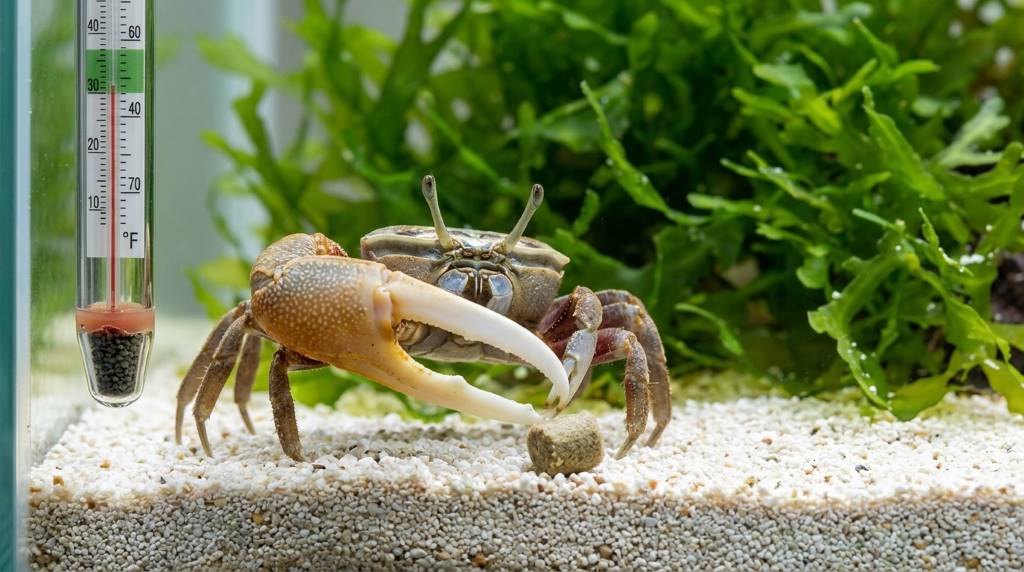
Fiddler crabs are not freshwater creatures; they require a brackish water environment. Many new owners mistakenly keep them in pure freshwater, which leads to osmotic stress and loss of appetite. This specific gravity should be around 1.005 to 1.010 for optimal health. You need a hydrometer to measure and adjust the salinity properly. Sudden changes in salinity will also cause your crab to stop eating. Always mix marine salt with dechlorinated water and test it before each water change. A stable salinity level is critical for your crab’s overall well-being.
Dietary Boredom and Nutritional Needs
A monotonous diet is a common reason for a pet crab to lose interest in food. Fiddler crabs are omnivorous scavengers that need variety to thrive. They require a mix of plant and animal-based foods in their daily meals. Relying solely on one type of pellet will likely lead to nutritional deficiencies. You should offer a rotation of foods like algae wafers, blanched vegetables, and protein sources. Small pieces of shrimp, bloodworms, and even crushed fish flakes provide excellent variety. Remember to remove uneaten food from the tank to prevent it from fouling the water. Providing a diverse diet mimics their natural foraging habits and keeps them engaged.
How to Tell if Your Crab is Molting or Sick
Sometimes, a loss of appetite is a natural part of the molting process. Before a crab molts, it will often become lethargic and stop eating for a few days. This is normal behavior, but it can be easily confused with sickness. A molting crab may also hide in its burrow for extended periods. Do not disturb a crab that you suspect is molting, as it is very vulnerable. However, if the crab is not eating and also shows other signs like lethargy or a discolored shell, it may be ill. Poor water quality is the leading cause of both stress and illness in crabs.
Stress from Aggressive Tank Mates
If your crab is sharing a tank with fish or other crabs, it might be stressed. Fiddler crabs are usually peaceful, but they can become the target of aggression. Other fish species may nip at them or outcompete them for food. Male fiddler crabs can also be territorial and fight with each other for space. This constant harassment can cause a crab to hide and refuse to eat. Providing plenty of hiding spots and space can help reduce this stress. It is wise to ensure all tank mates are compatible with brackish water conditions. Peaceful fish like mollies or guppies are often good companions if the tank is large enough.
Temperature Fluctuations in the Big Easy
While New Orleans is warm, indoor temperatures can fluctuate drastically with the seasons. Fiddler crabs need a stable, warm environment to digest their food properly. The ideal water temperature for them is between 75°F and 85°F. If the water is too cold, their metabolism slows down, and they will stop eating. An aquarium heater with a reliable thermostat is essential for maintaining this consistency. Place the tank away from drafty windows or air conditioning vents to avoid sudden temperature drops. A stable temperature supports a healthy immune system and a good appetite.
FAQs
How long can a fiddler crab go without eating?
A healthy fiddler crab can survive for about one to two weeks without food, but this is not recommended.
What is the best food to entice a crab to eat?
Try offering a small piece of frozen brine shrimp or bloodworm, as the strong smell often stimulates their appetite.
Is my crab dead or just molting?
If you find an empty shell, it is likely an old exoskeleton; a molting crab will be soft and hiding, not smelly.
Why is my crab only eating algae wafers?
They may be targeting the algae as a primary food source, but they still require protein and vegetables for a balanced diet.
How often should I feed my pet crab?
Feed your crab once a day with a small amount of food, and remove anything left uneaten after a few hours.
Conclusion
Getting your pet crab to eat again requires a systematic approach to troubleshooting its environment. Start by checking your water quality, salinity, and temperature to ensure they are all in the ideal range. A varied diet and a stress-free tank are just as critical for stimulating a healthy appetite. By paying close attention to these factors, you can quickly resolve the issue. We encourage you to review your tank setup today and make any necessary adjustments for your crab’s health. Your observation and care are the keys to a thriving, active pet.