
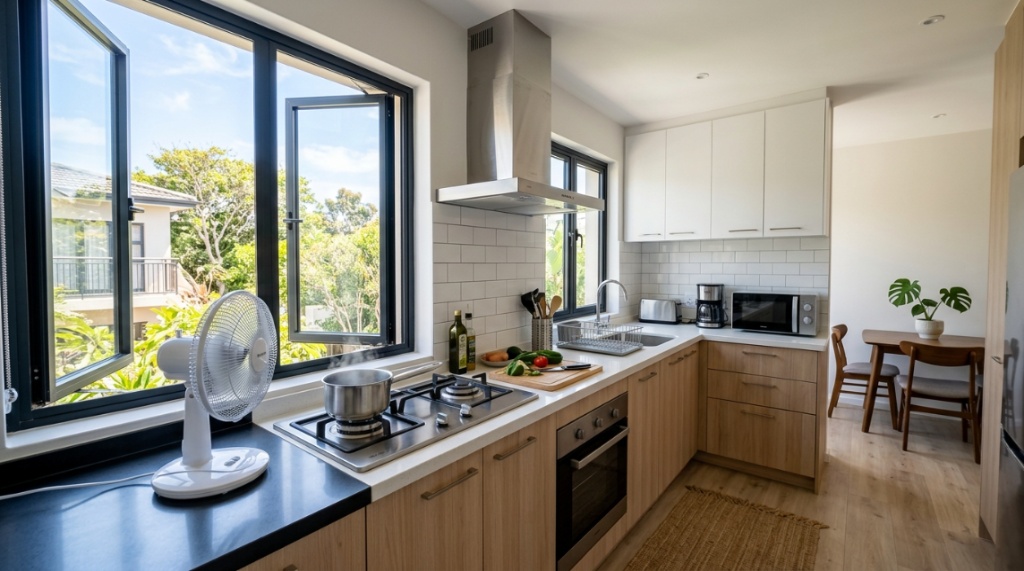
Cooking a quick stir-fry or searing a steak in a galley kitchen shouldn’t feel like you are signaling a distress flare. If you live in an apartment, condo, or smaller home, you know the panic that sets in when smoke billows from the pan and there is no window nearby. The physical problem is simple: a confined space traps grease, heat, and smoke particles quickly. The emotional toll is real—worrying about lingering odors, false fire alarms, and soot settling on every surface. Understanding how to effectively vent smoke small kitchen spaces is not just about comfort; it is about safety. This guide provides actionable solutions that work in tight layouts, from hardware upgrades to clever manual hacks that cost next to nothing.
Why Is Smoke So Trapped in a Small Kitchen Layout?
The Physics of Confined Cooking Spaces
Small kitchens lack the cubic footage required to dilute smoke naturally. When you heat oil above its smoke point (typically 350°F to 450°F), particles rise with hot air. In a large room, this plume dissipates. In a small space, it hits the ceiling, rolls down the walls, and fills the breathing zone within seconds. The lack of volume means even a minor cooking mistake creates a dense haze.
Common Airflow Obstacles in Tight Floor Plans
Many small kitchens are designed with minimal clearance between the stove and the ceiling. Cabinets placed directly above the cooktop create a dead-air zone. Additionally, closed layouts with no nearby windows or doors prevent cross-breezes. These obstacles turn a simple sear into a ventilation nightmare, making it critical to choose the right size and power of extraction equipment.
Why Over-the-Range Microwaves Fail
Over-the-range microwaves are common in compact kitchens, but they often feature weak fans (rated around 200–400 CFM) and shallow grease filters. Unless they duct air outside, they just recirculate smoke through a charcoal filter, which does little for smoke removal. Recirculating units filter odors partially but leave fine smoke particles airborne.
What Is the Best Type of Range Hood for a Small Kitchen?
Ducted vs. Ductless: Which Actually Removes Smoke?
A ducted hood is always superior for smoke removal. It captures contaminated air and pushes it outside through a duct. Ductless (recirculating) hoods pass air through a charcoal filter before releasing it back into the room. While ductless is easier to install in spaces without existing ductwork, ducted systems actually remove smoke, moisture, and grease particles from your breathing air. If you have an exterior wall access, choose ducted.
Power Requirements: CFM and BTUs Explained
For a small kitchen, you need a minimum of 400 CFM (cubic feet per minute) of airflow. If you have a gas stove with high BTU burners, aim for 600 CFM. The rule of thumb is 100 CFM per 10,000 BTUs of cooktop power. Too much CFM in a very small room can cause negative pressure, leading to backdrafts from water heaters. Balance power with makeup air solutions.
Undercabinet vs. Wall-Mounted vs. Downdraft
Undercabinet hoods are ideal for small kitchens where you lack wall space above the stove. Wall-mounted chimney styles are best if you have a range positioned against an exterior wall. Downdraft vents rise from behind the cooktop and are excellent for island cooktops, but they are less effective at capturing rising smoke than overhead hoods. For most small kitchens, an undercabinet ducted hood offers the best compromise of performance and footprint.
Check out our guide on Crafting Your Lifestyle’s Dream Kitchen for more layout and design inspiration.
How Can I Improve Ventilation Without Major Renovations?
Using Portable Air Purifiers Strategically
Place a HEPA air purifier with a carbon pre-filter on the counter near the stove. Turn it on at high speed before you start cooking. While it cannot capture smoke at the source, it will scrub the air in the room within 15–20 minutes. This is a low-cost, renter-friendly solution that dramatically reduces particle concentration after cooking.
Creating Temporary Negative Pressure
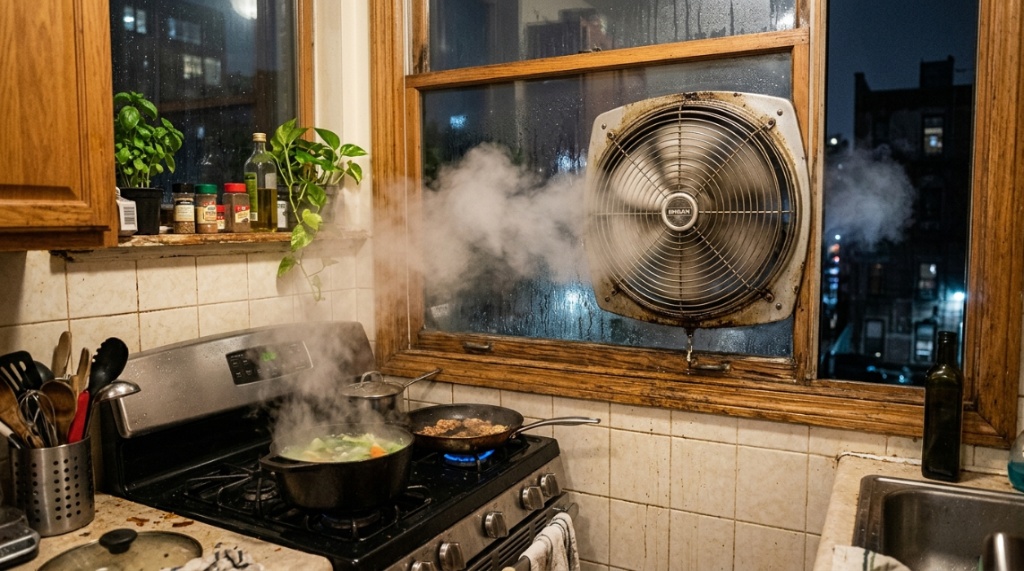
Open a window in an adjacent room and place a box fan facing outward. Then close the kitchen door. This creates negative pressure in the kitchen, drawing fresh air in from under the door and pushing contaminated air out through the window. This manual setup works surprisingly well for preventing smoke from spreading to the rest of your home.
Window Fans and Cross-Ventilation Hacks
If your small kitchen has one window, install a reversible window fan. Set it to exhaust mode and crack a nearby window in the living room to create a cross-draft. For extra effectiveness, use a foam board to seal the gap around the fan so air is forced out rather than leaking back in. This hack costs under $50 and reduces visible smoke by 60%.
Which Cooking Techniques Reduce Smoke Production?
Using Oils with High Smoke Points
Avocado oil (smoke point 520°F), ghee (485°F), and refined coconut oil (450°F) produce far less smoke than olive oil (375°F) or butter (350°F). Switching oils is the single easiest way to prevent smoke before it starts. Keep a bottle of high-smoke-point oil next to your stove for stir-fries and searing.
Preheating Pans Correctly
Many home cooks heat pans on high for five minutes, causing oil to break down instantly. Instead, heat your pan on medium for two minutes, then add oil and wait 30 seconds before adding food. This gradual approach prevents the pan surface from exceeding the oil’s smoke point. A simple infrared thermometer ($15) takes the guesswork out of pan temperature.
Splatter Control and Lid Management
Use splatter screens or partially cover pans with lids to trap grease particles before they become airborne. For deep frying, a mesh splatter guard allows steam to escape while trapping large particles. When you lift a lid, condensation drips back into the pan rather than creating a steam explosion that carries smoke into the room.
Can a Windowless Kitchen Have Proper Exhaust?
Installing a Through-the-Wall Vent Kit
If you have no window and no overhead duct, a through-the-wall vent is your best option. These compact fans mount directly into an exterior wall, typically near the stove. They require a 4- to 6-inch hole and basic electrical work. The initial installation cost is around $200–400, but it provides true external ventilation in a windowless space.
The Role of Activated Carbon Filters
When Recirculation Is the Only Option
In cases where you cannot cut through walls or ceilings (rental apartments), a high-quality recirculating hood with a thick activated carbon filter is essential. Replace the charcoal filter every three to four months—soaked filters cannot trap smoke. Pair the recirculating hood with a standalone HEPA purifier to compensate for the lack of ducting.
How Do I Choose the Right Size Hood for a Small Kitchen?
Matching Hood Width to Cooktop Width
Your hood should be at least as wide as your cooktop, ideally three inches wider on each side. A 30-inch cooktop should have a 36-inch hood if possible. For a 24-inch cooktop in a tight apartment, a 30-inch hood provides extra capture area without overwhelming the room visually.
Mounting Height for Maximum Capture
Gas ranges require the hood bottom to be 24–30 inches above the cooktop. Electric and induction ranges can be mounted slightly lower, around 20–24 inches. Mounting too high allows smoke to escape the capture zone; mounting too low obstructs cooking and poses a burn risk. Measure carefully before installation.
Noise Levels and Living Space Impact
Small kitchens often open into living areas, making noise a critical factor. Look for hoods rated at 6 sones or lower (a quiet conversation is 4 sones). Some modern brushless DC motor hoods operate at 3 sones on low speed. A loud fan discourages use, so investing in a quieter model ensures you actually run it every time you cook.
What Maintenance Mistakes Kill Exhaust Performance?
Neglecting Grease Filter Cleaning
Grease filters clog after three to four uses if you cook heavily. Wash aluminum mesh filters in hot soapy water or run them through the dishwasher every two weeks. Baffle filters (metal with overlapping slats) should be soaked in degreaser monthly. A clogged filter reduces airflow by up to 50% and becomes a fire hazard.
Ignoring Ductwork Buildup
Grease accumulates inside duct runs over months. If you notice reduced airflow despite clean filters, hire a professional duct cleaning service. Flexible aluminum ducts are especially prone to buildup. Rigid metal ducts perform better and require less maintenance.
Forgetting Charcoal Filter Replacement
In recirculating hoods, charcoal filters cannot be washed—they must be replaced. Mark your calendar for replacement every 90 days. A spent charcoal filter not only fails to remove smoke but also starts releasing trapped odors back into the room. This is the most common reason recirculating hoods get a bad reputation.
Are Exhaust Hoods Required by Code in Small Kitchens?
International Residential Code (IRC) Rules
Most building codes in the United States require a ventilation system for any kitchen with a gas cooktop. The IRC mandates that exhaust must discharge directly outdoors, not into attics or crawl spaces. Electric cooktops have looser requirements—ventilation is recommended but not always mandatory. Always check local amendments.
Makeup Air Requirements for Powerful Hoods
If you install a hood rated above 400 CFM, many jurisdictions require a makeup air system to prevent negative pressure. Makeup air ensures that exhaust fans do not pull air down through your chimney or water heater vent. For small kitchens with a 400 CFM hood, passive makeup air through a window is typically sufficient.
Renter Safety and Liability
If you rent, your landlord is responsible for providing working ventilation. If your kitchen lacks any exhaust fan or operable window, you may have legal grounds to request an installation. Document the issue and check your local tenant laws regarding habitability standards.
Which Affordable Range Hoods Actually Perform in Tight Spaces?
Compact Slimline Models
Look for hoods that are less than 18 inches deep and mount flush with upper cabinets. Brands like Broan, Zephyr, and Cosmo offer undercabinet models with 400 CFM airflow and 6-sone noise levels. Prices range from $150 to $350. Avoid generic no-name brands that quote CFM at zero static pressure—actual performance is typically half the advertised number.
Retrofit Ductless Kits for Existing Hoods
If you already have a ducted hood but cannot connect it to the outside, some manufacturers sell recirculation conversion kits. These include charcoal filters and a directional vent that redirects filtered air back into the room. This is a $50 fix for a hood that would otherwise be useless. For a curated list of models that balance affordability and performance in small kitchens, check our selection of range hoods designed to vent smoke small kitchen environments effectively.
How Do I Test If My Exhaust Is Working Properly?
The Smoke Pencil Test
Light a stick of incense and hold it two inches from the hood intake while the fan runs on high. Watch the smoke trail. It should be pulled directly into the filter with no drifting. If the smoke curls upward or escapes sideways, your hood is undersized, mounted too high, or the duct is blocked.
Measuring Airflow with an Anemometer
An inexpensive digital anemometer ($25 on Amazon) measures actual air velocity at the filter face. Multiply the velocity (in feet per minute) by the filter area (in square feet) to get true CFM. If the result is less than 300 CFM, cleaning filters or checking ductwork will likely improve performance significantly.
Listening for Backdraft Indicators
When you run your hood, walk to nearby rooms and listen for whistling sounds around windows and doors. Whistling indicates negative pressure strong enough to compromise combustion appliances. If you hear whistling, reduce fan speed or open a window slightly to balance air pressure.
Frequently Asked Questions
Can I use a standard bathroom fan to vent kitchen smoke?
No. Bathroom fans are rated for moisture removal, not grease-laden cooking exhaust. They lack the necessary CFM output and grease filters, and they are not fire-rated for kitchen use. Installing a bathroom fan above your stove violates fire codes and creates a grease buildup hazard.
How often should I run my kitchen exhaust fan?
Run your exhaust fan for at least 15 minutes before you start cooking and continue for 15 minutes after you finish. This pre-ventilation period clears stagnant air, while the post-run cycle removes lingering particles and odors. For heavy cooking, extend the post-run to 20 minutes.
Does opening a window while using the hood help?
Yes, but only if the window is cracked two to three inches. Opening it fully can disrupt the hood’s capture pattern. A small gap provides makeup air without creating cross-drafts that blow smoke away from the hood intake. Keep the kitchen door closed to prevent smoke from entering adjacent rooms.
What is the most common mistake small kitchen owners make?
Installing a hood that matches the aesthetic but not the performance requirements. Many choose a sleek, minimalist hood with 200 CFM because it fits the design. This is insufficient for any cooking beyond boiling water. Prioritize CFM and ducting type over appearance in a small kitchen.
Can I vent my range hood into the attic or ceiling?
No. This is code illegal in virtually all jurisdictions. Venting into the attic deposits grease and moisture, promoting mold growth and creating a fire hazard. Exhaust must terminate outside through a roof cap or wall vent. Recirculating hoods are the only legal alternative when external venting is impossible.
How do I clean smoke smell from walls and cabinets?
Mix a solution of warm water, white vinegar, and a few drops of dish soap. Wipe all hard surfaces with a microfiber cloth. For fabric surfaces, sprinkle baking soda and let it sit for 30 minutes before vacuuming. An ozone generator can neutralize persistent odors but should only be used in unoccupied spaces.
Is a mesh filter better than a baffle filter for smoke removal?
Baffle filters are generally better for smoke removal. They use multiple curved vanes that force air to change direction, separating grease particles more effectively than mesh filters. Baffle filters also resist clogging and are less of a fire hazard. Mesh filters require more frequent cleaning and degrade faster.
Conclusion
Successfully managing cooking smoke in a small kitchen requires a combination of smart equipment choices, thoughtful cooking techniques, and regular maintenance. Prioritize a ducted range hood with at least 400 CFM and proper mounting height. If you cannot duct outside, pair a recirculating hood with a HEPA air purifier and use high-smoke-point oils. Simple manual hacks like creating negative pressure with a window fan or using an infrared thermometer for pan temperature make a measurable difference. Test your exhaust regularly with an incense stick, and never ignore clogged filters—they are the number one killer of performance. Whether you own or rent, take action today: check your current hood’s CFM rating, clean its filters, and adjust your cooking methods. Your kitchen—and your lungs—will thank you.

