

You know the feeling. You are finally at the beach, the sun is warm, and you are ready to hit the waves. But then the worry creeps in. You grab the sunscreen, reapply it, and still wonder if you missed a spot. Sunburn is painful, and even worse, the constant worry can ruin the fun. The solution is simpler than you think. Investing in the best women’s rash guards UV protection swimwear takes the guesswork out of sun safety. A good rash guard acts as a second skin, blocking harmful rays while keeping you comfortable all day long.
This year, the market is packed with options, but finding one that fits well, looks great, and actually works can be overwhelming. This guide breaks down exactly what to look for, why UPF ratings matter, and how to choose a top that fits your active lifestyle. We cover everything from fabric technology to fit and style so you can spend less time shopping and more time enjoying the water.
What Exactly Is a Women’s Rash Guard and How Does It Provide Sun Protection?
A women’s rash guard is a performance swim shirt designed primarily to protect the skin from the sun’s harmful UV rays and physical irritation. Unlike regular swimsuits, these tops are made from tightly woven, stretchy fabrics like nylon and spandex. The tight weave physically blocks a significant percentage of ultraviolet radiation from reaching your skin. Many are given a UPF (Ultraviolet Protection Factor) rating, which tells you exactly how much UV radiation the fabric filters out. A UPF 50+ rating, for example, blocks 98% of UV rays, offering excellent protection.
The term ‘rash guard’ originally referred to the garment’s ability to prevent rashes caused by sand or surfboard wax. Today, the sun protection function is often the primary reason people buy them. The fabric acts as a reliable barrier that never washes off, unlike sunscreen. This makes them an incredibly convenient and effective tool for long days outdoors.
UPF vs. SPF: Understanding the Difference
It is easy to confuse UPF and SPF, but they measure different things. SPF (Sun Protection Factor) measures how long sunscreen protects your skin from UVB rays, which cause sunburn. UPF (Ultraviolet Protection Factor) measures how much UV radiation (both UVA and UVB) passes through the fabric. A UPF 50 shirt allows only 1/50th of the UV radiation to reach your skin. This is a permanent physical barrier, whereas sunscreen can wear off with sweat and water.
Why Should You Choose a Rash Guard Over Regular Sunscreen for Swimming?
Choosing a rash guard offers a level of consistent protection that sunscreen alone cannot match. Sunscreen is effective, but it requires perfect application, frequent reapplication, and it loses efficacy in water and with sweat. A rash guard is a worry-free solution. You put it on once, and you are protected for the entire swim session. This eliminates the common problems of missed spots, burning eyes from dripping sunscreen, and the greasy feeling on your skin.
Beyond protection, rash guards provide practical benefits for any active water sport. They reduce friction between your skin and a surfboard, paddleboard, or wetsuit, preventing chafing. They also offer a layer of warmth in cooler water, helping you stay comfortable and stay out longer. For anyone who values convenience and reliable protection, a rash guard is a superior choice.
How Do You Choose the Best UPF Rating for Your Needs?
For the best protection, you should always look for a UPF 50+ rating. This blocks 98% of UV radiation and is considered the gold standard. While you might find garments with UPF 30 or 40, these only block 96.7% and 97.5% respectively. The difference seems small, but over a full day in the sun, every percentage point matters, especially for those with fair skin or a history of skin cancer in the family.
UV radiation is strongest between 10 AM and 4 PM, and it reflects off water and sand, increasing your exposure. A UPF 50+ shirt gives you the highest level of defense against both direct and reflected rays. For most people spending time on the beach or in the water, this is the only rating worth considering. It offers peace of mind so you can focus on having fun.
Which Fabric Is Best for a Women’s Rash Guard: Nylon or Polyester?
Both nylon and polyester are excellent choices, but they have different strengths. Nylon is incredibly soft and feels more like a second skin against your body. It offers excellent stretch and a comfortable, flexible fit that doesn’t restrict movement. However, nylon can absorb more water and may take slightly longer to dry. Polyester, on the other hand, is highly durable and resistant to chlorine and fading from the sun. It dries very quickly and holds its shape well over time.
When you see a blend that combines nylon and spandex, you get a shirt that feels soft, moves with you, and still dries relatively fast. Many of the best women’s rash guards UV protection swimwear on the market use a nylon-spandex blend for this reason. If you prioritize comfort and a soft feel, go with a nylon blend. If you prioritize durability and quick drying for frequent use, polyester is a better option.
What Fit Is Best: Tight, Loose, or Compressive?
A rash guard should fit snugly against your skin without being restrictive. The fit needs to be close so the fabric can stretch and move with you without riding up or creating drag in the water. A compressive fit offers the best performance for surfing and paddleboarding because it supports your muscles and stays perfectly in place during dynamic movements. It also ensures the fabric maintains contact with your skin, maximizing its UPF protection.
Loose-fitting rash guards can cause problems. They can balloon up with water as you dive or get caught in the spray, creating drag. They are also more likely to ride up and expose your skin to the sun. A snug, athletic fit is the most functional. You should be able to move your arms freely overhead without the bottom hem riding up past your waist. If you are between sizes, it is often better to size down for a performance fit rather than up for comfort.
Can You Wear a Rash Guard for Activities Other Than Surfing?
Absolutely. While rash guards originated with surfing, they are now a staple for virtually any outdoor water or sun activity. They are perfect for swimming, snorkeling, paddleboarding, kayaking, wakeboarding, and even just lounging by the pool. Their versatility makes them an essential piece of travel gear for anyone who spends time in the sun.
They are also fantastic for hiking near lakes or rivers, running outdoors, or any high-exposure sport where you don’t want to rely solely on sunscreen. The fabric wicks away moisture and dries quickly, making it suitable for land-based activities too. Essentially, anytime you are outside for a long period, especially near reflective surfaces like water or snow, a rash guard is a smart, practical layer.
How Should You Care for Your Rash Guard to Make It Last Longer?
Proper care is crucial for maintaining the UPF rating and elasticity of your rash guard. The number one enemy of performance swimwear is heat and harsh chemicals. You should always rinse your rash guard in cold, fresh water immediately after use. Saltwater and chlorine will degrade the fabric and spandex over time. Do not wring it out; gently squeeze the excess water out.
Never put your rash guard in the washing machine with fabric softener or bleach. Fabric softener coats the fibers and can damage the spandex, reducing the fit and elasticity. If you must machine wash it, use a gentle cycle with cold water and a mild detergent specifically for activewear. The most important rule is to never put it in the dryer. High heat will destroy the elastic fibers and shrink the garment. Always hang it to dry in the shade, as direct sunlight can also fade the colors and break down the material.
Which Features Enhance Comfort for All-Day Wear?
For all-day comfort, look for specific features that go beyond the basic design. Flatlock seams are a game-changer. Unlike standard seams that can rub and chafe, flatlock seams lie flat against your skin, eliminating irritation. A longer torso length is another key feature. Many standard swim tops ride up, exposing your stomach. A rash guard designed for active use should have a longer hem that stays tucked into your bottoms or sits securely on your hips.
- Flatlock Seams: Prevents chafing under the arms and along the sides.
- Longer Torso: Keeps the shirt from riding up when you move.
- Raglan Sleeves: Allow for a greater range of motion in the shoulders.
- Zippered or Pullover: Zippers are easier to remove when wet, while pullovers are simpler and lighter.
- Printed vs. Solid: Prints can hide stains and wear better than light solids, which can show discoloration over time.
How Do You Know If a Rash Guard Is True to Size?
Because fit is critical for both comfort and protection, you need to know how a brand measures. Always consult the brand’s specific size chart before purchasing. Measure your bust, waist, and hips and compare them directly. Do not rely on your usual dress size, as swimwear sizing can vary wildly between brands. A good rule of thumb is that if it feels loose when dry, it will feel looser when wet.
Pay close attention to customer reviews that mention fit. People often note whether a shirt runs small, large, or true to size. Look for reviews from customers who use the shirt for the same activity you plan to do. A surfer will have different fit needs than someone who wants it for casual swimming. If you are between sizes, read reviews about the specific stretch of the fabric. Some materials are more forgiving than others.
When Should You Replace Your Women’s Rash Guard?
You should replace your rash guard once the fabric shows signs of wear or loss of elasticity. Even with the best care, spandex will eventually break down from exposure to sun, salt, and chlorine. A key sign is when the shirt starts to feel baggy or loose, especially around the neckline and shoulders. If the fabric becomes thin or you can see light through it easily, the UPF rating is likely compromised.
Another sign is fading or pilling of the fabric. While fading doesn’t always affect UPF, pilling indicates that the fibers are breaking down. Most high-quality rash guards last between one and two seasons with regular use. If you use your shirt very frequently, you might need to replace it every season to ensure you are getting the advertised sun protection. When in doubt, hold it up to the light. If it looks sheer, it is time for a new one.
What Is the Difference Between a Men’s and Women’s Rash Guard?
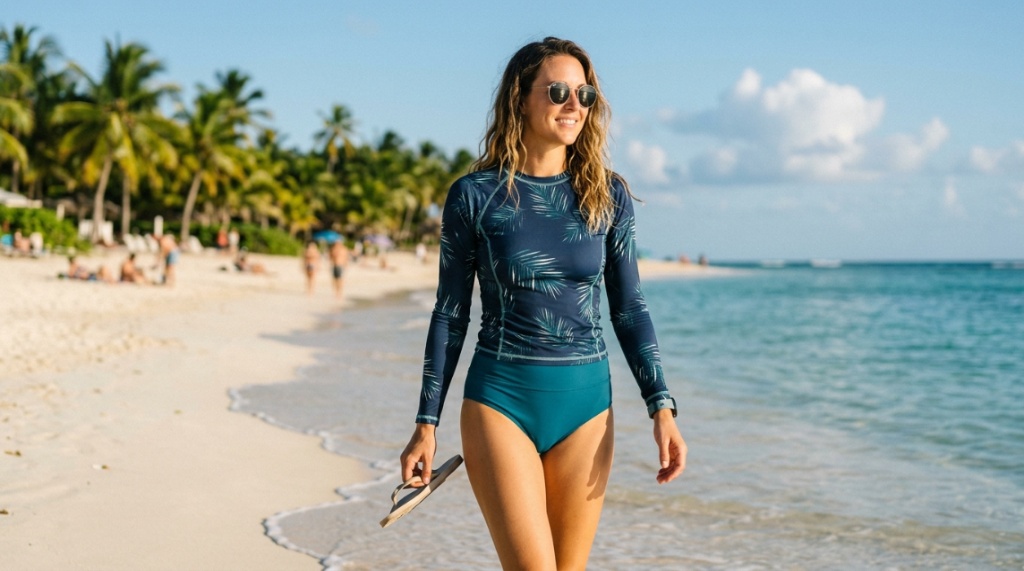
The primary difference is in the cut and fit. Women’s rash guards are tailored to accommodate a woman’s body shape. They typically feature a more defined waist, a longer torso to account for a higher hip, and a wider chest area. The sleeves are often cut differently to allow for a greater range of motion in the shoulders. Men’s rash guards are typically cut straighter and boxier.
While a man’s rash guard might technically fit, it will likely be too loose in the waist and too tight in the hips for a woman. It may also be shorter in the torso, which leads to riding up. For the best fit and performance, it is always recommended to buy a shirt specifically designed for women. The investment in the right fit pays off in comfort and protection.
Comparison Table: Key Features of Top Rash Guards
| Feature | Performance (Surfing) | Recreational (Swimming) |
|---|---|---|
| Fit | Snug, compressive | Snug but relaxed |
| Seams | Flatlock (critical) | Flatlock (preferred) |
| Sleeve Length | Long sleeve (best UPF) | Short or long sleeve |
| Closure | Pullover (light) or Zipper (easy removal) | Pullover (simplest) |
| Fabric Weight | Heavier, more durable | Lightweight, soft |
Frequently Asked Questions
Can I wear a rash guard for running or working out?
Yes. Rash guards are excellent for outdoor running or high-intensity workouts. The fabric is moisture-wicking, quick-drying, and offers consistent sun protection. Look for a style with flatlock seams to prevent chafing during extended movement.
Do rash guards lose their UPF protection over time?
Yes, eventually. The UPF rating is highest when the fabric is new and in good condition. As the fabric stretches, fades, or becomes worn, the protection decreases. Proper care like rinsing in cold water and hanging to dry extends the life of the UPF rating.
Is a long sleeve or short sleeve rash guard better for sun protection?
A long sleeve rash guard offers the best sun protection because it covers more skin. If you are extremely sun-sensitive or plan to be in the water for hours, long sleeves are the safest choice. Short sleeves are cooler and allow for more freedom of movement for the arms.
Can I swim in a chlorinated pool with a rash guard?
Yes, you can, but chlorine can damage the fabric over time. Rinse your rash guard thoroughly with fresh, cold water immediately after leaving the pool. Avoid leaving it wet in a towel or bag. With proper care, it will last well in a pool setting.
How do I wash a rash guard without damaging it?
The best method is hand washing with cold water and a mild detergent specifically for activewear or swimwear. If you must use a machine, select the delicate cycle with cold water. Never use bleach or fabric softener. Always hang the rash guard to dry away from direct sunlight.
Can I wear a rash guard as a standalone top?
Yes, many women wear rash guards as a standalone top for swimming, paddleboarding, or lounging. They look great with high-waisted bikini bottoms, board shorts, or swim skirts. They are designed as a functional swim top that also provides sun protection.
What does a UPF 50 rating actually mean for my skin?
A UPF 50 rating means the fabric allows only 1/50th of the sun’s UV radiation to pass through it. This blocks 98% of both UVA and UVB rays. It offers excellent protection and is the standard recommended by dermatologists for extended sun exposure.
Packing the right gear is only half the battle when preparing for a day under the sun. While ensuring you have the best women’s rash guards for comfortable sun protection keeps you safe on the water, getting to your destination safely matters just as much. If you are planning a drive to the coast, check out our guide on how to turn your car into a road trip companion to make your journey as comfortable as your beach wear.
Conclusion: Your Skin Deserves the Best Protection
Spending time in the water should be about joy and freedom, not constant worry about sun damage. A high-quality women’s rash guard is the single most effective and comfortable tool you can add to your beach bag. It provides consistent, wash-off-proof protection that lets you focus on surfing that wave or floating in the pool without interruption. By choosing a UPF 50+ top with a snug fit and durable fabric, you are making an investment in your skin’s health and your own peace of mind.
Do not settle for a shirt that rides up or feels restrictive. Find one that moves with you and offers real protection. Your skin will thank you years from now. Check out our curated collection of the best women’s rash guards UV protection swimwear to find your perfect match for this season. Get protected, get comfortable, and get back in the water.