
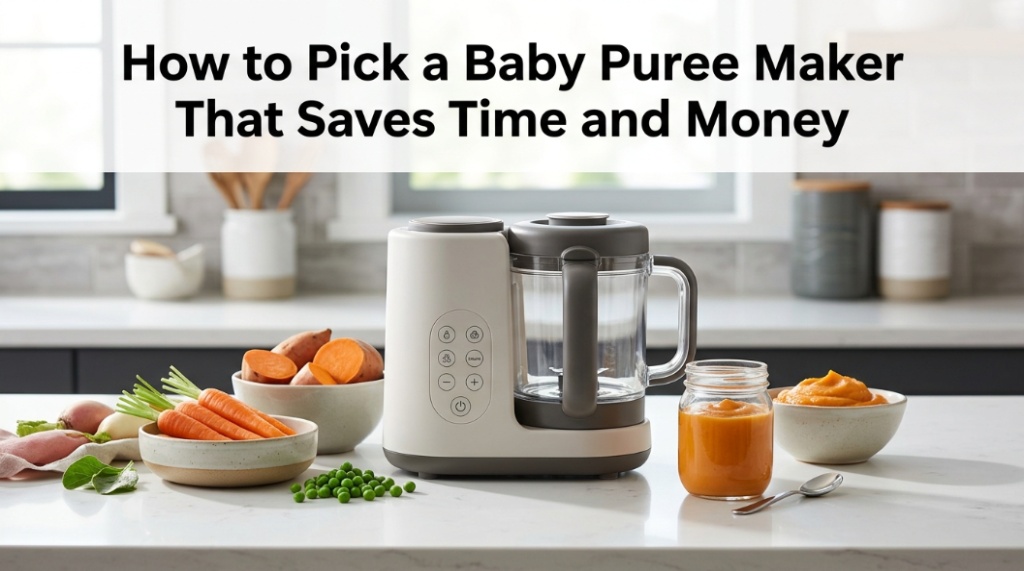
At 6:17 a.m., while most kitchen appliances are still silent, thousands of parents are already pureeing sweet potatoes, steaming carrots, and packing meals before work. The fastest way to simplify that routine is choosing the right baby puree blender—one that steams, blends, and cleans up quickly without forcing you to buy multiple appliances. A well-designed machine saves time, reduces food waste, and lowers the long-term cost of feeding your baby homemade meals.
Many parents start making baby food to save money and control ingredients, only to discover that using separate pots, steamers, and blenders creates extra work. Cleanup takes longer than meal prep. Storage becomes messy. Inconsistent textures can frustrate babies transitioning to solids. The solution is selecting a baby puree maker that matches your cooking habits, budget, and kitchen space. This guide explains exactly how to choose a machine that delivers convenience, value, and reliable results.
Definition: A baby puree maker is a kitchen appliance designed to prepare baby food by steaming, blending, chopping, reheating, or defrosting ingredients in a single workflow. Many modern models function as a steam and blend machine, allowing parents to cook and puree ingredients without transferring food between containers.
What Should You Look for in a Baby Puree Maker First?
Direct answer: Start by evaluating functionality, capacity, ease of cleaning, safety features, and overall operating cost rather than focusing only on price.
The best baby puree maker is not necessarily the most expensive model. Parents often get better value from machines that simplify daily food preparation and minimize cleanup time. Before comparing brands, determine how often you’ll make baby food and how much you plan to prepare in each batch.
If you’re researching complete buying recommendations, this guide to the best baby food makers for busy parents offers additional insights into popular models and features.
Key factors to prioritize include:
- Steam and blend capability
- BPA-free food-contact materials
- Dishwasher-safe components
- Water reservoir accessibility
- Batch size flexibility
- Reliable motor performance
- Compact countertop footprint
- Simple controls
- Food safety certifications
Parents preparing food daily benefit most from one-touch operation and easy cleaning systems. These features often provide greater value than premium extras that rarely get used.
Why Is a Steam and Blend Machine Better Than Separate Appliances?
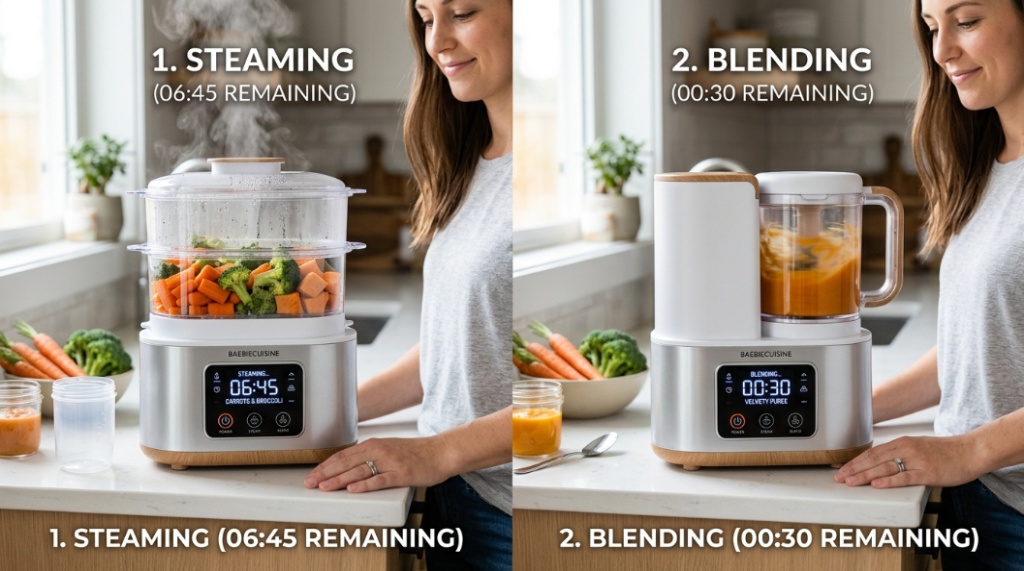
Direct answer: A steam and blend machine saves time, reduces dishwashing, and preserves workflow efficiency because ingredients move from cooking to pureeing without additional transfers.
Traditional baby food preparation usually involves several steps:
- Wash ingredients
- Cut fruits or vegetables
- Steam in a pot or basket
- Transfer food to a blender
- Blend to desired consistency
- Clean multiple containers
A steam and blend machine combines these steps into one system. Parents can place ingredients into the bowl, steam them, and blend immediately afterward.
Benefits include:
- Less countertop clutter
- Reduced preparation time
- Fewer dishes to wash
- More consistent puree texture
- Improved convenience for busy schedules
For families already preparing homemade meals and sauces, understanding efficient food-processing methods—similar to techniques used in this guide for making smooth homemade chipotle sauce—highlights how integrated blending systems can streamline kitchen work.
Many parents find that convenience directly impacts consistency. The easier the process becomes, the more likely they are to continue making homemade baby food regularly.
How Much Money Can Homemade Baby Food Actually Save?
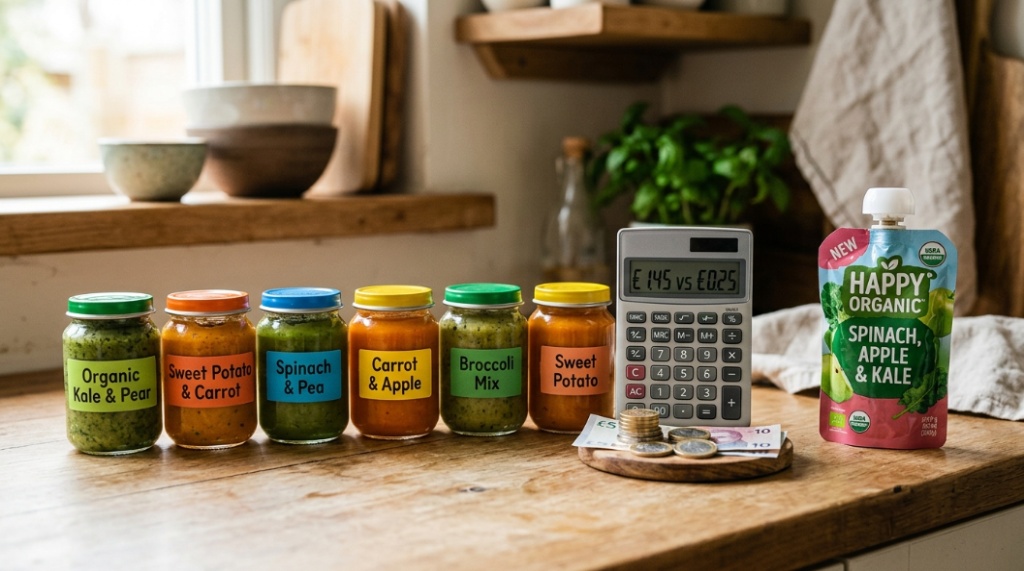
Direct answer: Homemade baby food can significantly reduce feeding costs over time, especially when using seasonal produce, bulk purchases, and reusable storage containers.
Commercial baby food pouches and jars may seem inexpensive individually, but costs add up quickly over months of daily feeding.
| Feeding Method | Estimated Monthly Cost | Control Over Ingredients |
|---|---|---|
| Store-Bought Pouches | Higher | Moderate |
| Store-Bought Jars | Moderate | Moderate |
| Homemade Purees | Lower | High |
Parents can prepare large batches of:
- Sweet potato puree
- Apple puree
- Carrot puree
- Pear puree
- Pumpkin puree
- Pea puree
- Butternut squash puree
Frozen portions can be stored and used throughout the week, reducing food waste while maintaining convenience.
A quality baby puree maker often pays for itself through ongoing savings generated by homemade baby food preparation.
Which Features Save the Most Time During Daily Meal Prep?
Direct answer: Automatic steaming, one-button blending, dishwasher-safe parts, and large-capacity bowls provide the biggest daily time savings.
Parents frequently underestimate the importance of cleaning and maintenance. A machine that blends quickly but requires extensive scrubbing after every use may become frustrating over time.
The most practical time-saving features include:
Automatic Steam Cycles
Pre-programmed steaming settings eliminate guesswork and help maintain consistent cooking results.
One-Handed Operation
Many parents prepare food while holding or supervising a child. Simple controls improve usability.
Dishwasher-Safe Components
Removable bowls, blades, and lids significantly reduce cleanup effort.
Large Water Reservoirs
Larger reservoirs require fewer refills and support multiple batches.
Easy Assembly
Complicated assembly procedures often discourage regular use.
When comparing products, imagine preparing baby food three times per week. Small convenience improvements quickly become major time savings.
What Capacity Is Best for Your Family?
Direct answer: Small households often need 400–600 ml capacity, while families planning batch cooking may benefit from larger bowls exceeding 800 ml.
Capacity affects both convenience and storage planning.
| Family Need | Recommended Capacity |
|---|---|
| Occasional Purees | 400–500 ml |
| Weekly Meal Prep | 600–800 ml |
| Bulk Batch Preparation | 800 ml+ |
Parents often underestimate future needs. Babies gradually increase food consumption, making slightly larger capacities more practical for long-term use.
Larger bowls also support preparing multiple ingredients simultaneously, such as apples and pears or carrots and sweet potatoes.
How Important Is Blend Quality for Baby Food Texture?
Direct answer: Blend quality is critical because texture consistency directly affects feeding success and developmental transitions.
Babies progress through different food stages:
- Smooth purees
- Thicker purees
- Mashed foods
- Soft textured foods
- Finger foods
A high-quality baby puree blender should handle each stage effectively.
Signs of good blending performance include:
- Smooth consistency without chunks
- Even processing throughout the bowl
- Minimal need for manual stirring
- Ability to process soft and firm ingredients
- Reliable operation with small batches
Strong blade design often matters more than motor wattage alone. Efficient blade geometry helps create smoother results while requiring less processing time.
Are Multifunction Baby Food Makers Worth the Extra Cost?
Direct answer: Multifunction units are worthwhile when the additional functions replace other kitchen appliances you would otherwise purchase.
Many modern baby food makers offer:
- Steaming
- Blending
- Defrosting
- Reheating
- Sterilizing
- Chopping
- Mixing
Not every feature provides equal value.
For most families, the highest-value functions are:
- Steaming
- Blending
- Reheating
- Defrosting
Additional specialty functions may be helpful but should not outweigh performance in the core steaming and blending tasks.
What Safety Features Should Parents Prioritize?
Direct answer: Focus on BPA-free materials, overheating protection, secure lid-lock systems, and food-safe construction.
Safety should remain a primary consideration when evaluating any appliance used for infant nutrition.
Important features include:
- BPA-free plastic components
- Food-grade materials
- Stable non-slip base
- Automatic shutoff systems
- Overheat protection
- Locked blending operation
- Leak-resistant design
Reputable manufacturers typically provide documentation regarding material safety and testing standards.
Parents should also inspect seals, blade assemblies, and steam vents periodically to maintain safe operation.
Can a Baby Puree Blender Handle More Than Baby Food?
Direct answer: Yes. Many baby puree blenders can prepare sauces, soups, smoothies, vegetable purees, and small meal portions for the entire family.
Versatility improves overall value.
Many households continue using their baby food maker after infancy for:
- Fruit smoothies
- Vegetable soups
- Dips
- Sauces
- Pureed vegetables
- Soft-texture meals
- Healthy snack preparation
Extending appliance usage beyond the baby-food stage increases return on investment and reduces kitchen equipment redundancy.
How Do You Choose the Best Model for Your Budget?
Direct answer: Match features to your actual routine rather than buying the model with the longest feature list.
Ask yourself these practical questions:
- Will I prepare food daily or weekly?
- Do I prefer batch cooking?
- How much counter space is available?
- Do I need reheating functionality?
- Will multiple caregivers use the machine?
- How important is dishwasher compatibility?
Parents who cook large batches may prioritize capacity and durability. Those preparing fresh daily meals may prioritize compact size and speed.
The ideal baby puree maker balances:
- Functionality
- Ease of cleaning
- Durability
- Safety
- Long-term value
Conclusion: Which Baby Puree Maker Delivers the Best Value?
Direct answer: The best value comes from a baby puree maker that combines steaming and blending in one appliance, minimizes cleanup, supports batch preparation, and remains useful beyond infancy.
Choosing the right baby puree blender is less about finding the newest gadget and more about selecting a tool that fits your family’s routine. Features such as integrated steaming, reliable blending performance, dishwasher-safe parts, and appropriate capacity create measurable savings in both time and money. A quality steam and blend machine reduces kitchen workload, encourages homemade nutrition, and helps parents prepare fresh meals efficiently.
As you compare options, focus on everyday practicality instead of marketing claims. Consider cleaning effort, workflow efficiency, safety standards, and future usability. Parents who apply these criteria consistently make better purchasing decisions and enjoy a smoother baby-feeding journey. For more family-focused food preparation inspiration, explore practical homemade recipe ideas like this easy homemade sauce preparation guide to understand how versatile blending systems can simplify meal creation.
Invest wisely today, and your baby puree maker can continue delivering value long after the puree stage ends.
Frequently Asked Questions
What is the difference between a baby puree maker and a regular blender?
A baby puree maker is specifically designed for infant food preparation and often includes steaming, reheating, and defrosting functions. Regular blenders focus primarily on blending and usually require ingredients to be cooked separately.
Is a steam and blend machine worth buying for one child?
Yes. Parents who regularly prepare homemade baby food often recover the cost through reduced spending on packaged baby food while benefiting from greater ingredient control and convenience.
How long can homemade baby puree be stored?
Most homemade baby purees can be refrigerated for up to 48 hours or frozen for several months when stored properly in airtight containers. Always follow pediatric food safety recommendations.
Can I make fruit and vegetable purees in the same machine?
Yes. Most baby puree blenders are designed to process fruits, vegetables, legumes, and other baby-safe ingredients. Proper cleaning between uses prevents flavor transfer.
How often should a baby food maker be cleaned?
It should be cleaned immediately after every use. Prompt cleaning prevents food residue buildup, maintains hygiene, and improves appliance longevity.
What foods work best in a baby puree blender?
Sweet potatoes, carrots, peas, pears, apples, squash, bananas, peaches, and avocados are among the most commonly prepared baby-food ingredients because they puree easily and provide valuable nutrients.
Should I choose a glass or plastic baby food maker?
Glass containers resist staining and odor absorption, while BPA-free plastic models are typically lighter and easier to handle. The best choice depends on durability preferences, weight considerations, and budget.